



Abstract
Background: Monosodium glutamate (MSG), a widely used food additive, has been linked to disruption of lipid homeostasis with prolonged exposure. Phyllanthus emblica, known for its antioxidant and lipid-regulating properties, was investigated in this study for its protective effects against MSG-induced lipid disturbances in Wistar albino rats.
Methods: Adult Wistar albino rats were randomly assigned to seven groups with six animals in each group. The control group received distilled water. Three groups were treated with MSG at doses of 180 mg/kg, 360 mg/kg, and 720 mg/kg, respectively. Another three groups received the same MSG doses in combination with 75 mg/kg of an ethanolic extract of Phyllanthus emblica. All treatments were administered daily by oral gavage for 120 days. Upon completion of the experimental period, blood samples were collected for lipid profile analysis, including low-density lipoprotein (LDL), high-density lipoprotein (HDL), triglycerides, and total cholesterol.
Results: The MSG administration significantly increased LDL, triglycerides, and total cholesterol, while reducing HDL (P<0.05). Phyllanthus emblica extract improved these parameters in the low-dose MSG group (P<0.05); however, it failed to fully normalize lipid profiles at moderate and high MSG doses.
Conclusion: Chronic MSG exposure disrupts lipid homeostasis, increasing LDL and triglycerides while reducing HDL. Phyllanthus emblica extract shows protective effects, especially at lower MSG doses, but its efficacy declines with higher exposure levels. Further studies are needed to elucidate the mechanisms and determine optimal dosing to restore lipid balance.
Keywords: Dyslipidemias, Monosodium Glutamate, Phyllanthus emblica, Triglycerides, Wistar
Introduction
Monosodium glutamate (MSG) is a frequently used flavor enhancer that contributes a characteristic umami taste to many processed and home-prepared foods. Although MSG remains permitted for use in foods, contemporary toxicological and experimental literature continues to examine whether prolonged or high-dose exposure can promote oxidative stress, metabolic dysfunction, and tissue injury in animal models [1-3]. Obesity and dyslipidemia remain major public health concerns because they increase the risk of cardiovascular disease, insulin resistance, and fatty liver disease. Experimental studies using MSG-exposed rodents have linked chronic MSG administration with altered weight regulation, impaired glucose homeostasis, autonomic imbalance, and obesity-associated metabolic disturbances [4-6]. Additional recent studies also indicate that MSG toxicity may extend to hepatic, renal, and reproductive pathways, supporting continued investigation into its systemic metabolic effects [7-9]. The effects of MSG on lipid metabolism are of particular concern. Chronic exposure has been associated with increased triglycerides, elevated low-density lipoprotein (LDL), and reduced high-density lipoprotein (HDL), changes that may intensify cardiovascular risk [4, 5, 10]. Proposed mechanisms include oxidative stress, lipid peroxidation, inflammation, and disrupted insulin signaling, all of which can impair lipid handling and worsen atherogenic dyslipidemia [10-12]. There is growing interest in dietary interventions that may attenuate MSG-induced metabolic injury. Phyllanthus emblica (amla) is rich in vitamin C, tannins, flavonoids, and other polyphenolic compounds with antioxidant, anti-inflammatory, hepatoprotective, and lipid-regulating activities [13-15]. Recent reviews and experimental studies suggest that Phyllanthus emblica can improve serum lipid indices, modulate oxidative stress responses, and protect hepatic tissue in different disease models, including toxin-induced injury [15-17]. These properties make Phyllanthus emblica a plausible candidate for limiting MSG-induced dyslipidemia [18-19]. The present study therefore evaluated the protective effect of Phyllanthus emblica extract against MSG-induced lipid dyshomeostasis in Wistar albino rats under controlled experimental conditions.
Materials and Methods
Animal Procurement and Housing
The study was conducted in accordance with the guidelines established by the Institutional Animal Ethics Committee (Registration No. VIMS/IAEC/2016/03). A total of 42 adult Wistar albino rats of both genders were obtained for the experiment. The animals were housed in polypropylene cages under controlled environmental conditions, maintaining a temperature of 23±1°C and a 12-hour light/dark cycle. Standard laboratory chow and water were provided ad libitum. Prior to the initiation of experimental procedures, all rats were acclimatized to laboratory conditions for one week.
Experimental Design
The rats were randomly allocated to seven experimental groups, with each group consisting of six animals. Group 1 served as the control and received distilled water. Groups 2, 3, and 4 were administered MSG at doses of 180 mg/kg, 360 mg/kg, and 720 mg/kg body weight, respectively. Groups 5, 6, and 7 received the same respective MSG doses as Groups 2, 3, and 4, in combination with ethanolic extract of Phyllanthus emblica at a dose of 75 mg/kg body weight. All treatments were administered daily via oral gavage for 120 consecutive days. The selected MSG doses were derived from previously reported chronic rat studies documenting biochemical and oxidative injury after repeated MSG administration [20-22]. Dose selection was also guided by human consumption benchmarks, because the U.S. Food and Drug Administration reports that average intake of added MSG is approximately 0.55 g/day in adults. In contrast, intake of 3 g or more without food has been associated with short-term symptoms in some sensitive individuals, and EFSA has established a group acceptable daily intake of 30 mg/kg body weight/day for glutamic acid and glutamates [23, 24]. On that basis, 180, 360, and 720 mg/kg were used to model graded exposures in rats, extending from levels above usual human dietary intake to substantially higher toxicological doses suitable for chronic experimental evaluation. The Phyllanthus emblica dose was chosen as a fixed protective dose based on prior preclinical studies reporting antioxidant, hepatoprotective, and lipid-modulating effects in rats [15, 25, 26].
Blood Sample Collection and Analysis
Upon completion of the treatment period, blood samples were collected from the rats for lipid profile assessment. The analysis included quantification of LDL, HDL, triglycerides, and total cholesterol. Following centrifugation of the collected blood samples at 3000 RPM for 10 min, the resulting serum was evaluated for lipid profiles utilizing an Erba model autoanalyser. Triglyceride concentrations were determined by the GPO-PAP (Glycerol Phosphate Oxidase–Peroxidase) enzymatic colorimetric method. The HDL and LDL cholesterol levels were quantified using direct measurement techniques. Total cholesterol was assayed by means of the CHOD-PAP (Cholesterol Oxidase–Phenol 4-aminoantipyrine Peroxidase) colorimetric method.
Statistical Analysis
Data were expressed as mean±standard deviation (SD). One-way analysis of variance (ANOVA) followed by Tukey’s post-hoc test was employed for statistical comparisons among the groups. Moreover, a significance level was set at P<0.05.
Ethical Considerations
All experimental procedures were conducted in compliance with guidelines approved by the Institutional Animal Ethics Committee. Both the study protocols and animal husbandry adhered to the recommendations of the Committee for the Purpose of Control and Supervision of Experiments on Animals (CPCSEA) for laboratory animal facilities.
Results
Significant differences in lipid profile parameters (P<0.05) were observed between the control and MSG-induced groups. Triglyceride levels were significantly elevated (P < 0.05) in all MSG-induced groups compared to the control group (Fig. 1). All MSG-exposed groups demonstrated a significant increase (P<0.05) in LDL relative to controls (Fig. 2). The HDL levels were markedly lower (P<0.05) in all MSG-induced groups compared to the control group (Fig. 3). Moreover, total cholesterol levels were significantly higher (P<0.05) in all MSG-induced groups relative to controls (Fig. 4). In the low-dose MSG group treated with Phyllanthus emblica, a significant reduction (P<0.05) in triglyceride levels was observed compared with the corresponding MSG-induced group (Fig. 5).
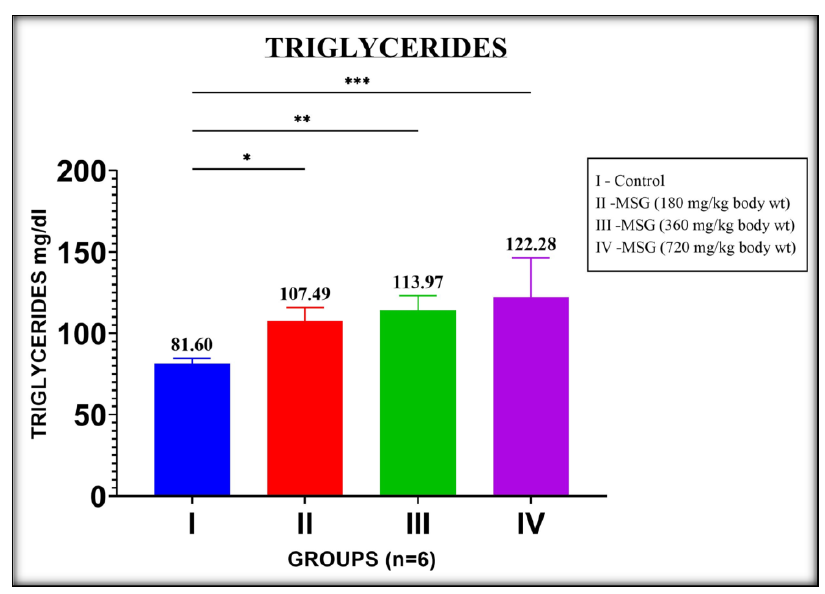
Figure 1. Effect of MSG on Triglycerides in MSG induced groups. Values are represented as mean±SD. (*P<0.05, **P<0.01, ***P<0.001, and ****P<0.0001).
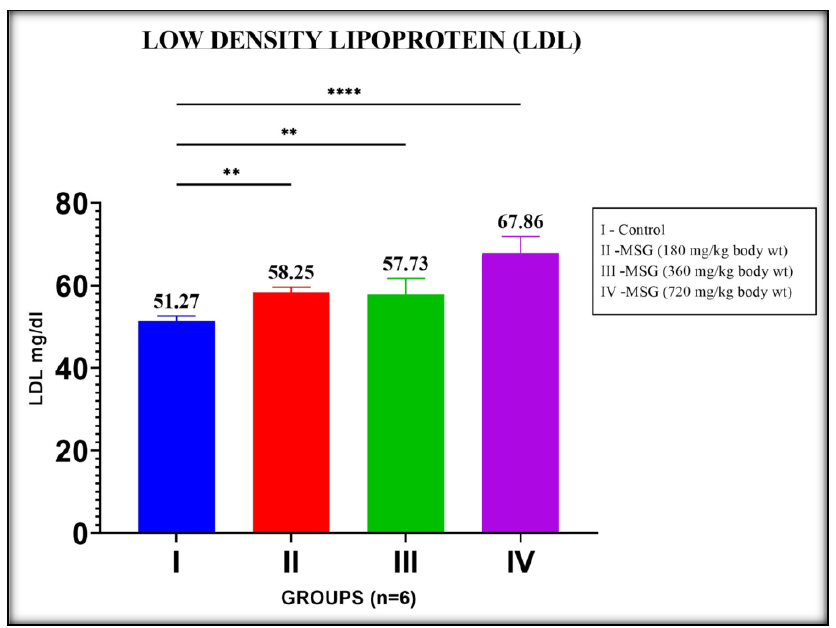
Figure 2. Effect of MSG on LDL in MSG induced groups. Values are represented as mean±SD. (*P<0.05, **P<0.01, ***P<0.001, and ****P<0.0001)
The low-dose MSG plus treatment group also exhibited a significant decrease (P<0.05) in LDL when compared with the respective MSG-induced group (Fig. 6). Additionally, the low-dose MSG plus treatment group indicated a significant increase in HDL compared to the low-dose MSG-induced group (Fig. 7). Total cholesterol levels were significantly decreased (P<0.05) in the Phyllanthus emblica-treated low-dose MSG group relative to the respective MSG-induced group (Figure 8).
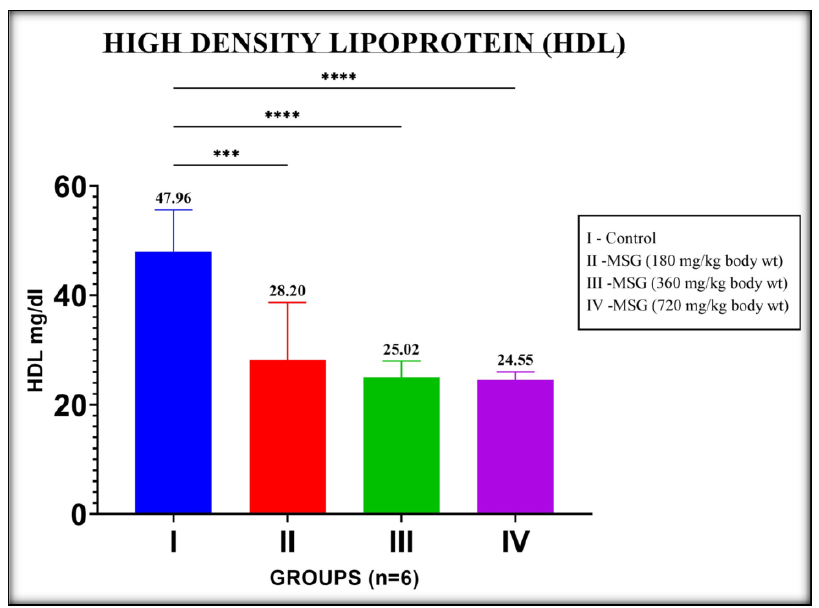
Figure 3. Effect of MSG on HDL in MSG induced groups. Values are represented as mean±SD. (*P<0.05, **P<0.01, ***P<0.001, and ****P<0.0001)
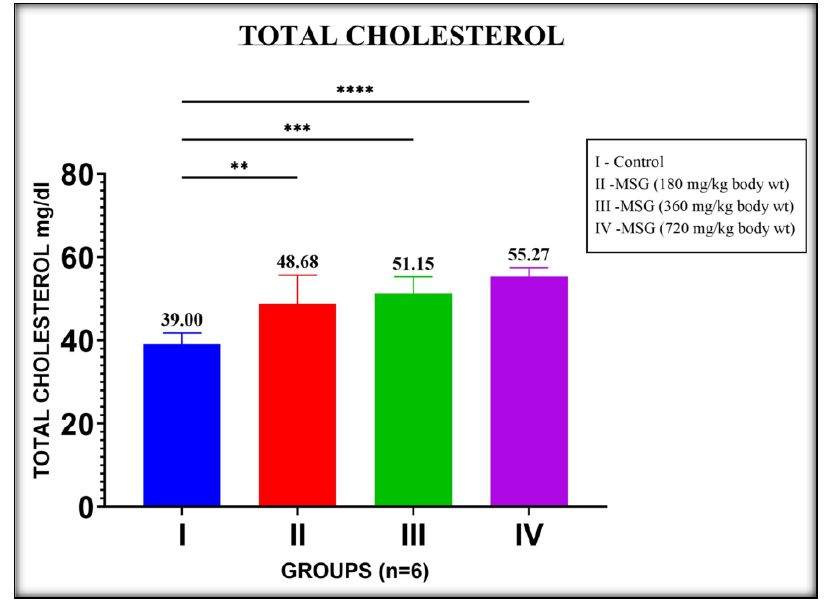
Figure 4. Effect of MSG on Total cholesterol in MSG induced groups. Values are represented as mean±SD. (*P<0.05, **P<0.01, ***P<0.001, and ****P<0.0001)
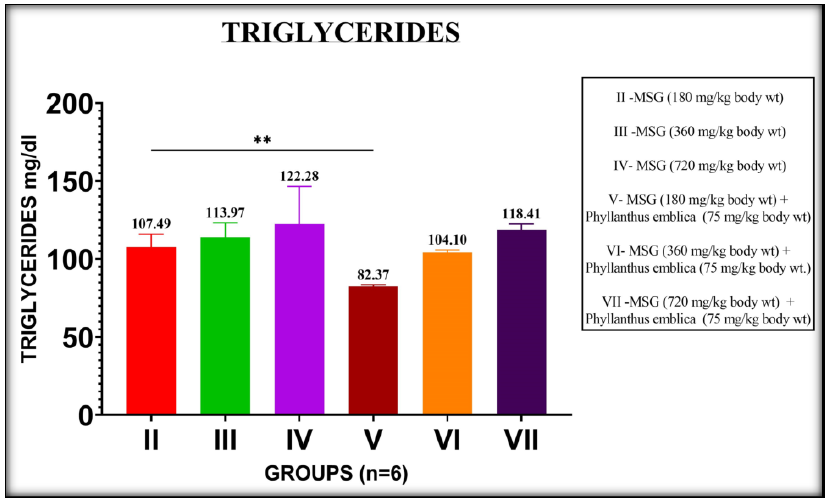
Figure 5. Comparison of MSG induced groups versus MSG induced groups treated with the ethanolic extract of Phyllanthus emblica on Triglycerides. Values are represented as mean±SD. (*P<0.05, **P<0.01, ***P<0.001, and ****P<0.0001)
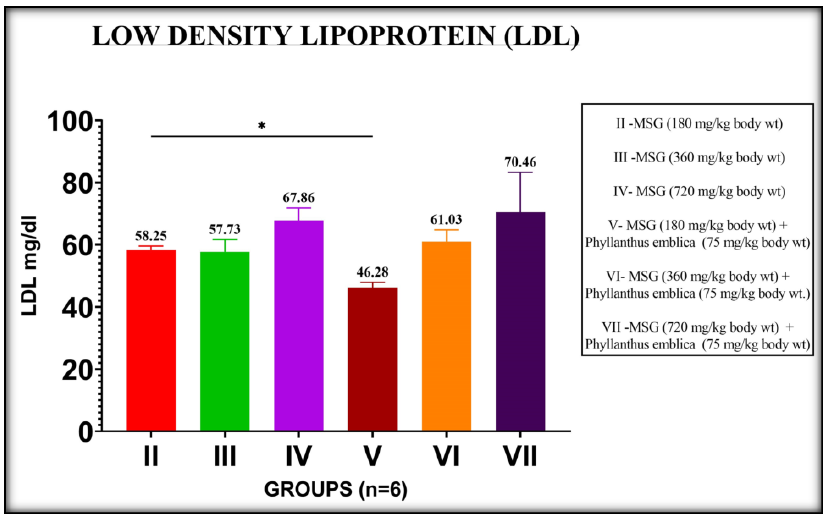
Figure 6. Comparison of MSG induced groups versus MSG induced groups treated with the ethanolic extract of Phyllanthus emblica on LDL. Values are represented as mean±SD. (*P<0.05, **P<0.01, ***P<0.001, and ****P<0.0001)
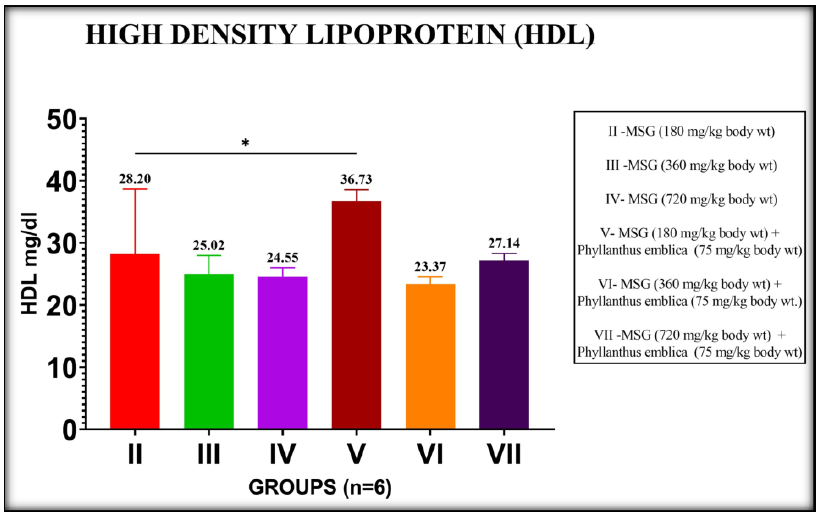
Figure 7. Comparison of MSG induced groups versus MSG induced groups treated with the ethanolic extract of Phyllanthus emblica on HDL. Values are represented as mean±SD. (*P<0.05, **P<0.01, ***P<0.001, and ****P<0.0001)
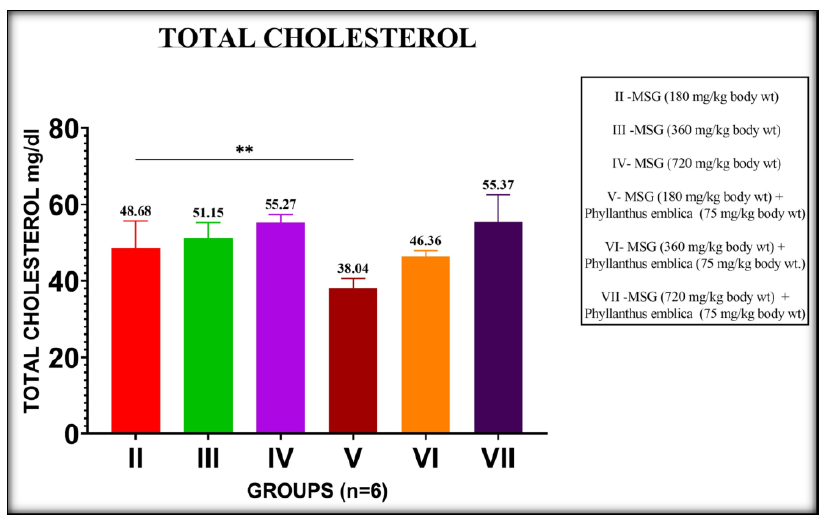
Figure 8. Comparison of MSG induced groups versus MSG induced groups treated with the ethanolic extract of Phyllanthus emblica on total cholesterol. values are represented as mean±SD. (*P<0.05, **P<0.01, ***P<0.001, and ****P<0.0001)
Discussion
The present study demonstrates that prolonged MSG exposure markedly disturbs lipid homeostasis and that Phyllanthus emblica extract provides only partial protection against this injury. The increases in LDL, triglycerides, and total cholesterol, together with the reduction in HDL, observed in the present experiment, are consistent with earlier experimental reports describing MSG-associated dyslipidemia and cardiometabolic dysfunction [4, 5, 9]. The mechanisms underlying MSG-induced lipid dysregulation are likely multifactorial. The current literature links MSG toxicity to oxidative stress, lipid peroxidation, inflammatory activation, disturbances in autonomic and insulin signaling, and broader metabolic imbalance, all of which may contribute to abnormal lipid handling [5, 6, 27]. Since dyslipidemia is closely tied to atherosclerotic cardiovascular risk, these biochemical alterations are biologically relevant beyond the experimental setting [10-12]. Within this experimental context, Phyllanthus emblica extract improved lipid parameters most clearly in the low-dose MSG group. This pattern is consistent with the broader literature describing Phyllanthus emblica as a source of antioxidant and hypolipidemic phytochemicals that can reduce oxidative burden, improve serum lipid profiles, and protect hepatic tissue [13, 26, 28]. The favorable effect observed in the present study therefore plausibly reflects combined antioxidant, anti-inflammatory, and hepatoprotective actions [16, 17, 29]. The protective effect of Phyllanthus emblica was incomplete at moderate and high levels of MSG exposure, suggesting a dose-dependent limitation of its benefit. Experimental and review literature indicates that while Phyllanthus emblica may modulate pathways relevant to lipid metabolism and tissue protection, the magnitude of toxic insult remains important in determining therapeutic response [15, 26, 28]. Further studies should clarify the optimal extract dose, treatment duration, and molecular targets needed to improve efficacy under higher MSG burden [16,17,29]. The present study emphasizes the adverse impact of chronic MSG exposure on lipid metabolism and highlights the potential of Phyllanthus emblica extract as a protective intervention. Although the extract demonstrates promise in restoring lipid homeostasis, additional research is necessary to clarify the underlying mechanisms and establish optimal treatment regimens. These findings are further supported by reports on the antihyperlipidemic and hepatoprotective activities of Emblica officinalis and by studies describing chronic MSG-associated biochemical injury in Wistar rats [20, 25, 26]. Additional experimental work has documented chronic oxidative injury in this model and hepatoprotective effects of Phyllanthus Emblica [15, 21, 22]. Broader toxicological evidence also indicates that MSG exposure can impair reproductive tissues and function in male models [30]. The biological plausibility of Emblica officinalis/Phyllanthus emblica as a protective agent is further supported by phytochemical and hepatoprotective reviews [31-33]. Additional studies extend this framework to metabolic and neurobehavioral domains, including improved insulin secretion and lipid regulation with d-pinitol and reports of headache-like and developmental neurotoxic outcomes in MSG models [34-36]. These considerations also align with current clinical perspectives on dyslipidemia management and with recent reviews of plant products proposed for the management of MSG-induced liver injury [37, 38]. Further work has likewise demonstrated that MSG can exacerbate reproductive toxicity in male Wistar rats under inflammatory challenge [39].
Conclusions
In the present study, chronic MSG exposure was accompanied by unfavorable changes in the serum lipid profile, including higher LDL cholesterol and triglyceride levels and lower HDL cholesterol levels. Co-administration of Phyllanthus emblica extract appeared to improve these lipid changes most clearly at the lower MSG dose, while the response was less pronounced at moderate and high MSG exposure. As mechanistic biomarkers were not directly assessed, these findings should be viewed as preliminary evidence of lipid profile modulation rather than confirmation of specific antioxidant, anti-inflammatory, and insulin signaling pathways. Further studies with extract-only control and broader metabolic and mechanistic assessments are warranted to better define the potential protective role and optimal dosing of Phyllanthus emblica.
Limitations
The present study primarily focused on serum lipid profile assessment and did not include direct mechanistic biomarkers. Therefore, explanations of oxidative stress, inflammation, insulin signaling, or hepatoprotection should be considered interpretive rather than conclusive. The absence of a Phyllanthus emblica-only control group also limits assessment of the extract’s independent effects. Future studies with broader metabolic and mechanistic endpoints would help strengthen interpretation of the protective response observed here.
Conflicts of Interest
The authors declare that there is no conflict of interest.
Funding
This research received no funding from any source.
Acknowledgement
The authors acknowledge the continuous support of Vydehi Institute of Medical Sciences & Research Centre, Bengaluru, India, for accomplishing the present research work.
Compliance with Ethical Guidelines
The entire study protocol and animal handling were conducted in accordance with the guidelines of the Committee for the Purpose of Control and Supervision of Experiments on Animals (CPCSEA). Institutional Animal Ethics Committee (IAEC) permission with reg no: VIMS/IAEC/2016/03 was acquired before the initiation of the study.
Authors' Contributions
Conceptualization & supervision: Dr. Varsha Sriram Mokhasi, Dr. Venkata Bharat Kumar Pinnelli, Dr. Shashi Rekha M
Design: Dr. Varsha Sriram Mokhasi & Dr.Surendra Babu Thangachi
Data Collection and Analysis: Dr. Surendra Babu Thangachi
Drafting the Manuscript: Dr.Surendra Babu Thangachi, Dr. Aga Ammar Murthuza, Dr. Shabina Komath Chenoly, Dr. Venkata Bharat Kumar Pinnelli, Dr. Shashi Rekha M
Reviewing and Editing: All authors read and approved the final manuscript.
References
- Zanfirescu A, Ungurianu A, Tsatsakis AM, Nitulescu GM, Kouretas D, et al. A review of the alleged health hazards of monosodium glutamate. Compr rev food Sci Food Saf [Internet]. 2019;18(4):1111-34. [DOI: 10.1111/1541-4337.12448] [PMID: 31920467.]
- Nnadozie JO, Chijioke UO, Okafor OC, Olusina DB, Oli AN, Nwonu PC, et al. Chronic toxicity of low-dose monosodium glutamate in albino Wistar rats. BMC Res Notes. 2019;12(1):593. [DOI: 10.1186/s13104-019-4611-7] [PMID: 31533812]
- Bayram HM, Akgoz HF, Kizildemir O, Ozturkcan A. Monosodium glutamate: review on preclinical and clinical reports. Biointerface Res Appl Chem. 2023;13(2):149. [DOI:10.33263/briac123.149]
- Hernández Bautista RJ, Mahmoud AM, Königsberg M, López Díaz Guerrero NE. Obesity: pathophysiology monosodium glutamate-induced model and anti-obesity medicinal plants. Biomed Pharmacother. 2019;111:503-16. [DOI: 10.1016/j.biopha.2018.12.108] [PMID: 30597304.]
- Franco CCS, Previate C, Trombini AB, Miranda RA, Barella LF, Saavedra LPJ, et al. Metformin improves autonomic nervous system imbalance and metabolic dysfunction in monosodium L-glutamate-treated rats. Front Endocrinol (Lausanne). 2021;12:660793. [DOI: 10.3389/fendo.2021.660793] [PMID: 34149616.]
- Wuyt AK, Nguelefack-Mbuyo EP, Fofié CK, Nguelefack TB. The methanol extract of Ceiba pentandra reverses monosodium glutamate-induced cardiometabolic syndrome in rats via the regulation of dyslipidemia, inflammation, oxidative stress, and insulin sensitization. Heliyon. 2023;9(2):e13689. [DOI: 10.1016/j.heliyon.2023.e13689] [PMID: 36865446.]
- Abd-Elkareem M, Soliman M, Abd El-Rahman MAM, Abou Khalil NS. Effect of Nigella sativa L. seed on the kidney of monosodium glutamate-challenged rats. Front Pharmacol. 2022;13:789988. [DOI: 10.3389/fphar.2022.789988] [PMID: 35814230.]
- Abdulghani MAM, Alshehade SA, Kamran S, Alshawsh MA. Effect of monosodium glutamate on serum sex hormones and uterine histology in female rats along with its molecular docking and in silico toxicity. Heliyon. 2022;8(10):e10967. [DOI: 10.1016/j.heliyon.2022.e10967] [PMID: 36237979.]
- Maulina N, Zachreini I, Gholib G, Suwandi A, Akmal M. Black garlic exhibited hepatoprotective effect against monosodium glutamate-induced hepatotoxicity in an animal model. Narra J. 2024;4(2):e799. [DOI: 10.52225/narra.v4i2.799] [PMID: 39280321.]
- O’Hagan R, Berg AR, Hong CG, Parel PM, Mehta NN, Teague HL. Systemic consequences of abnormal cholesterol handling: interdependent pathways of inflammation and dyslipidemia. Front Immunol. 2022;13:972140. [DOI: 10.3389/fimmu.2022.972140] [PMID: 36091062.]
- Zhang J, Dai W, Chen Y. Editorial: the roles of lipids in immunometabolism: the crosstalk between lipid metabolisms and inflammation. Front Cardiovasc Med. 2022;9:938535. [DOI: 10.3389/fcvm.2022.938535] [PMID: 35811702.]
- Vekic J, Stromsnes K, Mazzalai S, Zeljkovic A, Rizzo M, Gambini J. Oxidative stress, atherogenic dyslipidemia, and cardiovascular risk. Biomedicine. 2023;11(11):2897. [DOI: 10.3390/biomedicines11112897] [PMID: 38001900.]
- Gul M, Liu Z-W, Iahtisham-Ul-Haq, Rabail R, Faheem F, Walayat N, et al. Functional and nutraceutical significance of amla (Phyllanthus emblica l): a review. Antioxidants (Basel). 2022;11(5):816. [DOI: 10.3390/antiox11050816] [PMID: 35624683.]
- Saini R, Sharma N, Oladeji OS, Sourirajan A, Dev K, Zengin G, et al. Traditional uses, bioactive composition, pharmacology and toxicology of Phyllanthus emblica fruits: a comprehensive review. J Ethnopharmacol. 2022;282:114570. [DOI: 10.1016/j.jep.2021.114570] [PMID: 34480995.]
- Thangachi SB, Mokhasi VS, Sathyamoorthy YK, Pinnelli VBK, Chiruthanur S. Phyllanthus emblica extract protects the rat liver cells against the toxicity of monosodium glutamate: experimental evidence. Iran J Toxicol. 2022;16(3):203-10. [DOI: 10.32598/IJT.16.3.923.1]
- Rachitha P, Krishnaswamy K, Lazar RA, Gupta VK, Inbaraj BS, Raghavendra VB, et al. Attenuation of hyperlipidemia by medicinal formulations of emblica officinalis synergized with nanotechnological approaches. Bioengineer (Basel). 2023;10(1):64. [DOI: 10.3390/bioengineering10010064] [PMID: 36671636.]
- Acampado LRT, Chiu HHC, Larrazabal RB Jr, Arcellana AES, Añonuevo-Cruz MCS. The efficacy and safety of emblica officinalis aqueous fruit extract among adult patients with dyslipidemia: a systematic review and meta-analysis. Acta Med Philipp. 2023;57(5):90-5. [DOI: 10.47895/amp.vi0.5047] [PMID: 39678212.]
- Chen Y-Y, Chen S-Y, Chang H-Y, Liu Y-C, Chuang B-F, Yen G-C. Phyllanthus emblica l polysaccharides ameliorate colitis via microbiota modulation and dual inhibition of the rage/nf-kappab and mapks signaling pathways in rats. Int J Biol Macromol. 2024;258(Pt2):129043. [DOI: 10.1016/j.ijbiomac.2023.129043] [PMID: 38158054.]
- Singai C, Pitchakarn P, Taya S, Phannasorn W, Wongpoomchai R, Wongnoppavich A. Chemopreventive potential of Phyllanthus emblica fruit extract against colon and liver cancer using a dual-organ rat carcinogenesis model. Pharmaceuticals (Basel). 2024;17(7):818. [DOI: 10.3390/ph17070818] [PMID: 39065670.]
- Hareeri NA, Alrasheedi AA, Eassaw MM. Effect of sesame on liver enzymes and lipid profile in rats exposed to oxidative stress induced by monosodium glutamate. J Am Sci. 2017;13(1):71-8. [LINK]
- Thangachi SB, Mokhasi VS, Murthuza AA. Analysis of oxidative stress markers in chronic consumption of monosodium glutamate on liver of Wistar albino rats. Asian J Pharm Clin Res. 2021;14(11):116–9. [LINK]
- Thangachi SB, Mokhasi VS, Chenoly SK. Biochemical evaluation of chronic consumption of monosodium glutamate on liver of Wistar albino rats. Asian J Pharm Clin Res. 2021;14(10):99-102. [DOI: 10.22159/ajpcr.2021.v14i10.42819]
- U.S. Food and Drug Administration. Questions and answers on monosodium glutamate (MSG) [Internet]. Silver Spring (MD): FDA; 2012. [cited 2026 May 11]. [LINK]
- European Food Safety Authority. EFSA reviews safety of glutamates added to food [Internet]. Parma: European Food Safety Authority; 2017. [cited 2026 May 11]. [LINK]
- Santoshkumar J, Manjunath S, Pranavkumar MS. A study of anti-hyperlipidemia, hypolipidemic and anti-atherogenic activity of fruit of Emblica officinalis (amla) in high-fat-fed albino rats. Int J Med Res Health Sci. 2013;2(1):70-7. [LINK]
- Yin K, Li X, Luo X, Sha Y, Gong P, Gu J, et al. Hepatoprotective effect and potential mechanism of aqueous extract from Phyllanthus emblica on carbon-tetrachloride-induced liver fibrosis in rats. Evid Based Complement Alternat Med. 2021;2021:5345821. [DOI: 10.1155/2021/5345821] [PMID: 34712342.]
- Hajihasani MM, Soheili V, Zirak MR, Sahebkar A, Shakeri A. Natural products as safeguards against monosodium glutamate-induced toxicity. Iran J Basic Med Sci. 2020;23(4):416-30. [DOI: 10.22038/IJBMS.2020.43060.10123] [PMID: 32489556.]
- Prananda AT, Dalimunthe A, Harahap U, Simanjuntak Y, Peronika E, Karosekali NE, et al. Phyllanthus emblica: a comprehensive review of its phytochemical composition and pharmacological properties. Front Pharmacol. 2023;14:1288618. [DOI: 10.3389/fphar.2023.1288618] [PMID: 37954853.]
- Ma QG, Wang L, Liu RH, Yuan JB, Xiao H, Shen ZY, et al. Phyllanthus emblica Linn: a comprehensive review of botany, traditional uses, phytonutrients, health benefits, quality markers, and applications. Food Chem. 2024;446:138891. [DOI: 10.1016/j.foodchem.2024.138891] [PMID: 38432135.]
- Hamza RZ, Al-Harbi MS. Monosodium glutamate-induced testicular toxicity and the possible ameliorative role of vitamin E or selenium in male rats. Toxicol Rep. 2014;1:1037-45. [DOI: 10.1016/j.toxrep.2014.10.002] [PMID: 28962317.]
- Variya BC, Bakrania AK, Patel SS. Emblica officinalis (Amla): A review for its phytochemistry, ethnomedicinal uses, and medicinal potential with respect to molecular mechanisms. Pharmacol Res. 2016;111:180-200. [DOI: 10.1016/j.phrs.2016.06.013] [PMID: 27320046.]
- Nisar MF, He J, Ahmed A, Yang Y, Li M, Wan C. Chemical components and biological activities of the genus Phyllanthus: A review of the recent literature. Mol. 2018;23(10):2567. [DOI: 10.3390/molecules23102567] [PMID: 30297661.]
- Baliga MS, Shivashankara AR, Thilakchand KR, Baliga-Rao MP, Palatty PL, George T, et al. Hepatoprotective effects of the Indian gooseberry (Emblica officinalis Gaertn): a revisit. In: Watson RR, Preedy VR, editors. Dietary interventions in liver disease: foods, nutrients, and dietary supplements. London: Academic Press; 2019; 193-201. [DOI: 10.1016/B978-0-12-814466-4.00016-1]
- Silva Júnior JADA, Silva ACVFDA, Figueiredo LS, Araujo TR, Freitas IN, Carneiro EM, et al. D-pinitol increases insulin secretion and regulates hepatic lipid metabolism in msg-obese mice. An Acad Bras Cienc. 2020;92(4):e20201382. [DOI: 10.1590/0001-3765202020201382] [PMID: 33237150.]
Benbow T, Ranjbar Ekbatan M, Wang GHY, Teja F, Exposto FG, Svensson P, et al. Systemic administration of monosodium glutamate induces sexually dimorphic headache- and nausea-like behaviours in rats. Pain. 2022;163(9):1838-53. [DOI: 10.1097/j.pain.0000000000002592] [PMID: 35404557.]- Balakrishnan J, Krishnan B, Sekar T, Ayothi P, Muthu R, Sampathrajan V, et al. Maternal supplementation of high-value PUFA-rich Isochrysis sp biomass prevents monosodium glutamate-induced neurotoxicity in first-generation Wistar rats. Neurochem Int. 2022;154:105292. [DOI: 10.1016/j.neuint.2022.105292] [PMID: 35090980.]
- Cowart K, Singleton J, Carris NW. Inclisiran for the treatment of hyperlipidemia and for atherosclerotic cardiovascular disease risk reduction: A narrative review. Clin Ther. 2023;45(11):1099-104. [DOI: 10.1016/j.clinthera.2023.06.011] [PMID: 37451914.]
- Kasmara DP, Abdullah E, Harun Z, Sari FN, Abd Rashid N, Teoh SL. Mini review of plant products as food supplement against MSG-induced liver injury: antioxidant, oxidative stress and histological prospects. Front Pharmacol. 2025;16:1522814. [DOI: 10.3389/fphar.2025.1522814] [PMID: 39925850.]
- Ogunro OB, Asejeje FO, Hamzat ZO. Monosodium glutamate exacerbated the lipopolysaccharide-induced reproductive toxicity of male Wistar rats. BMC Pharmacol Toxicol. 2025;26(1):140. [DOI: 10.1186/s40360-025-00982-4] [PMID: 40751218]