Ethics code: IR.KUMS.REC.1398.960


Sharafi K, Nakhaee S, Mansouri B, Rahami B, Amirabadizadeh A, Tavakol K. Comparative Analyses of Serum Toxic Heavy Metal Ions in Opium Addicts and Healthy Controls. IJT 2025; 19 (1) :17-25
URL:
http://ijt.arakmu.ac.ir/article-1-1405-en.html
1- Research Center for Environmental Determinants of Health, Health Institute, Kermanshah University of Medical Sciences. Kermanshah, Iran
2- Medical Toxicology and Drug Abuse Research Center, Birjand University of Medical Sciences, Birjand, Iran
3- Substance Abuse Prevention Research Center, Health Institute, Kermanshah University of Medical Sciences, Kermanshah, Iran
4- Substance Abuse Prevention Research Center, Health Institute, Kermanshah University of Medical Sciences, Kermanshah, Iran , borhanmansouri@gmail.com
5- Emeritus Professor, College of Medicine, Howard University, Washington, D.C., USA
Full-Text [PDF 943 kb]
(769 Downloads)
|
Abstract (HTML) (1844 Views)
Full-Text: (354 Views)
Introduction
Opium use and its associated health effects have become an important public health concern, especially in nations, such as Iran, Afghanistan, and the Middle East, where opioid dependence is fairly prevalent. Derived from the poppy plant (Papaver somniferum), opium has been used by individuals for centuries mainly for its psychoactive effects and potential medicinal effects [1, 2]. However, the growing prevalence of opium dependence has led to alarming levels, mainly due to exposure to toxic heavy metals, such as lead. Contamination with various heavy metals in opium plants occurs during their growth and processing, which leads to the accumulation of high levels of toxic metal ions in opium [1-3]. Toxic metal exposure in opium users may also occur through the fraudulent addition of metals by smugglers who seek to raise the weight of opium products and hence their profits [4, 5].
Consistently, studies have shown that people who smoke opioid products have higher levels of heavy metals, including lead (Pb), cadmium (Cd), and arsenic (As) in their blood, compared to non-users, causing numerous health conditions [3, 6, 7]. A systematic review and meta-analysis conducted by Tabrizi et al. [5] in 2020 demonstrated that the oral consumption of opium has significantly increased in Iran. This finding is consistent with those of other studies [8, 9] that report a similar method of opioid consumption among users in various Iranian populations [8, 9].
Trace metal ions play important roles in many biological functions, and their deficient or excess levels may lead to serious health disorders. In this context, zinc, copper, and selenium play vital roles in the immune and antioxidant systems, as well as in overall human health [10, 11]. Conversely, toxic heavy metals, such as lead and cadmium are implicated in neurotoxicity, renal tissue damage, and other adverse health conditions [1, 12]. Interplay of essential and toxic elements in the human body may complicate the health impacts in opium users, as deficiency of essential trace elements is likely to raise adverse clinical outcomes due to heavy metal toxicity [6, 7, 13]. Effects of lead exposure in humans have caused growing health concerns. Furthermore, changes in the levels of toxic trace elements due to substance abuse, especially in opium addicts, can contribute to other health conditions, such as immune system suppression and vulnerability to infections [6, 11]. It has been shown that opium consumption, whether orally or by inhalation, can raise the blood levels of trace elements in humans [6].
Duration of opium consumption and the consumed amount are also linked to the levels of toxic heavy metals in users [14, 15]. Although an association between opium addiction and trace element levels in the blood has been suggested by several studies, the clinical outcomes are not always consistent. Some researchers have suggested that opium users may have lower levels of essential trace elements, reflecting their nutritional deficiencies [7, 10]. In contrast, various other studies have shown elevated levels of certain trace elements among opium users, suggesting a complex relationship between opium use, nutritional needs, and exposure to other detrimental factors [6, 7, 13].
Due to the complexity of the interactions and close relationship between opium consumption and the levels of trace elements in the body, this study aimed to measure the concentration of serum trace elements in opium users versus a group of healthy individuals. The present novel study has the potential to provide valuable data on the broader health consequences of dependence on opium use. The findings help shape public health policies and strategies toward the reduction of the risks of exposure to toxic metal ions and the resultant nutritional deficiencies in opium addicts.
Materials and Methods
Study design and protocol
This study was conducted as a cross-sectional project in 2019 in Birjand, South Khorasan, Iran. Its main focus was on people with a history of opium smoking and/or oral consumption versus a control group of non-users.
Inclusion and exclusion criteria
The inclusion criterion was a history of opium use. The exclusion criteria were exposure to heavy metals due to their occupations, affliction with chronic diseases, cancer, and/or involvement in other recreational drugs abuse.
Data collection and analyses
The data collection included demographic characteristics, blood indices, and measurement of heavy metals in the serum samples of opium users admitted to Imam Reza Hospital in Birjand, Iran. All items collected for the study were initially cleaned thoroughly with distilled water, and then immersed in 65% nitric acid solution (Merck, Germany) for 12 h. Next, they were washed again with distilled water to ensure they were free from impurities and contaminations. Venous blood samples (3-5 ml) were collected from both the patients and the control group after 12 h of fasting. The blood samples were then centrifuged at 2,500 rpm, and the serum samples were stored at -20 ºC for further processing and analyses.
Experiments
The acid digestion process began with the careful addition of 1 cc of each serum sample into a 50 cc Erlenmeyer flask. Next, 3 cc of nitric acid (65% pure) was added to each flask, and the mixture was left to digest overnight at room temperature. Following this step, 1 cc of 72% perchloric acid (Merck, Germany) was added, and the samples were incubated in a Bain-Marie water bath at 100 ºC to complete digestion until a clear solution was obtained. The digested samples were cooled to room temperature and brought to a volume of 25 cc, by the addition of double-distilled water. These samples were then filtered, using 0.45-μm nitrocellulose filters and transferred into sterile containers. Finally, the levels of heavy metals were measured in the serum samples (1 ml) on an inductively coupled plasma spectrometry.
Statistical analyses
After data collection, they were subjected to statistical analyses in SPSS software (version 18). The data were presented in tables to reflect both the qualitative variables, as well as the central and dispersion indices of the quantitative variables. Student t-tests were also performed to analyze the differences in the accumulation of toxic heavy metals in the serum samples of the experimental group versus those of the controls. Moreover, regression analyses were conducted to demonstrate the significant differences between the levels of toxic and essential heavy metals in the serum samples of the opium users, compared to those of the healthy individuals, versus the relationships with the qualitative variables. The statistical significance in all analyses was set at P≤0.05.
Results
Subjects
In total, 124 individuals with a mean age of 48.51±15.26 years old (minimum: 19.0, maximum: 80) were recruited into this study. Fifty four patients were opium users while 70 participants formed the non-opium group. Among the opium users, 49 (90.7%) participants were male, while among the non-users, 68 (97.1%) participants were male. The two groups were fairly well-matched regarding their age and gender. Among the opium users, 47 (87%) participants were married, 20 (37%) participants were workers, and 24 (44.4%) participants had completed elementary education (Table 1).
Table 1: Demographic data of the opium users and non-users.
| Variables |
Opium user group |
Non-opium user group |
P-value |
| Age |
49.54±15.68 |
47.71 ±12.83 |
0.10 |
| Gender |
|
|
|
| Male |
49 (90.7%) |
68 (97.1%) |
0.24 |
| Female |
5 (9.3%) |
2 (2.9%) |
| Material status |
|
|
|
| Single |
7 (13.0%) |
20 (28.6%) |
0.04 |
| Married |
47 (87.0%) |
50 (71.4%) |
| Occupation |
|
|
|
| Employment |
6 (11.1%) |
43 61.4%) |
<0.001 |
| Self-employed |
12 (22.2%) |
13 (18.6%) |
| Retired |
5 (9.3%) |
5 (7.1%) |
| Driver |
7 (13.0%) |
2 (2.9%) |
| House-wife |
4 (7.4%) |
2 (2.9%) |
| Worker |
20 (37.0%) |
5 (7.1%) |
| Education |
|
|
|
| Primary School |
24 (44.4%) |
3 (4.3%) |
<0.001 |
| Middle School |
9 (16.7%) |
7 (10.0%) |
| High School |
15 (27.8%) |
8 (11.4%) |
| Academic |
6 (11.1%) |
52 (74.3%) |
Serum heavy metal levels
Serum levels of toxic heavy metals were compared between the two groups of opium and non-opium users (Table 2). The mean chromium levels in the opium versus non-opium group were 98.98 (±32.59) and 70.36 (±39.10), respectively. Moreover, the mean serum lead level in the opium group was significantly higher than that of the control group (29.01±26.16 vs. 5.17±2.85).
The data derived from the Mann-Whitney U test indicated that the levels of chromium, iron, cobalt, copper, zinc, arsenic, and cadmium ions were significantly higher in the opium users than in the control group. However, the serum mercury levels of the opium users were significantly lower, compared to those of the controls (0.73±0.83 vs. 1.40±1.02; P<0.001). In the age bracket group of 20-40 years old, the mean serum levels of lead and cadmium in the opium users were 35.52±28.07 and 2.58±1.54, respectively. The lead levels in the age groups of 40-60 years old and over 60 years old were 28.26±27.28 and 23.97±22.83, respectively, in the opium user group (Table 3).
In the opium users group, levels of lead had a positive and significant correlation with chromium (r=0.37, P=0.006), iron (r=0.72, P<0.001), copper (r=0.75, P<0.001), zinc (r=0.67, P<0.001) and cadmium (r=0.78, P<0.001). In addition, the serum lead level correlated significantly but negatively with mercury (r=-0.66, P<0.001) and arsenic (r=-0.66, P<0.001). (Figure 1). In the control group, the serum lead levels had a significant and positive correlation with chromium (r = 0.31, P=0.01), iron (r = 0.36, P=0.002), cobalt (r = 0.53, P<0.001), nickel (r=0.30, P=0.01), copper ( r=0.46, P<0.001), zinc (r=0.24, P=0.04), cadmium (r=0.26, P=0.03) and mercury (r=0.35, P=0.003). Furthermore, a significant and inverse correlation was observed between the levels of serum lead versus thallium (r=-0.24, P=0.04) (Figure 2).
Table 2: Comparison of heavy metal levels (µg L-1) in opium users and non-users.
| Variable |
Opium user |
Non- opium user |
|
| Mean±SD |
Median (quartile) |
Mean ±SD |
Median (quartile) |
P-value |
| Cr |
98.98±32.59 |
106.7 (79.0-123.8) |
70.36 ±39.10 |
61.0 (42.5-87.5) |
<0.001 |
| Co |
3.36±2.74 |
3.20 (0.95-3.97) |
2.77 ±1.89 |
2.76 (1.25-3.93) |
0.54 |
| Ni |
82.54±40.24 |
81.05 (63.0-108.95) |
79.95 ±54.26 |
67.0 (26.5-130.0) |
0.79 |
| Cu |
142.88±281.96 |
95.70 (44.75-164.75) |
36.04 ±10.40 |
34.0 (29.0-42.0) |
<0.001 |
| Ti |
0.36±0.25 |
0.33 (0.09-0.59) |
0.39 ±0.29 |
0.34 (0.11-0.66) |
0.71 |
| Hg |
1.40±1.02 |
0.97 (0.70-2.02) |
0.73 ±0.83 |
0.40 (0.10-0.86) |
<0.001 |
| Pb |
29.01±26.16 |
20.62 (7.01-44.20) |
5.17 ±2.85 |
4.92 (3.21-6.86) |
<0.001 |
Table 3: Comparison of the mean heavy metal (Mean±SD) in opium users and non-users in terms of age.
| Age |
20-40 years old |
40-60 years old |
>60 P-value |
|
Opium user group |
Non-user group |
P-value |
Opium user group |
Non-user group |
P-value |
Opium user group |
Non-user group |
P-value |
| Cr |
95.05±27.70 |
67.11±31.12 |
0.002 |
97.13±32.33 |
67.42±23.52 |
0.001 |
105.33±37.96 |
110.80±103.20 |
0.78 |
| Co |
5.37±4.54 |
2.75±2.09 |
0.18 |
2.73±1.33 |
2.82±1.48 |
0.91 |
2.63±1.81 |
2.75±1.63 |
0.75 |
| Ni |
74.53±37.36 |
73.91±51.20 |
0.68 |
81.59±36.84 |
94.89±56.71 |
0.28 |
91.43±47.74 |
77.60±72.57 |
0.55 |
| Cu |
119.89±96.97 |
35.44±9.22 |
<0.001 |
94.27±57.22 |
34.84±8.59 |
<0.001 |
234.29±504.24 |
46.0±20.91 |
0.18 |
| Ti |
0.38±0.28 |
0.40±0.29 |
0.70 |
0.40±0.28 |
0.32±0.27 |
0.44 |
0.28±0.17 |
0.56±0.26 |
0.11 |
| Hg |
1.31±0.94 |
0.61±0.79 |
0.001 |
1.68±1.22 |
0.71±0.73 |
0.005 |
1.24±1.02 |
0.86±1.01 |
0.13 |
| Pb |
35.52±28.07 |
5.22±2.68 |
<0.001 |
28.26±27.28 |
5.32±3.46 |
<0.001 |
23.97±22.83 |
4.19±1.90 |
0.006 |
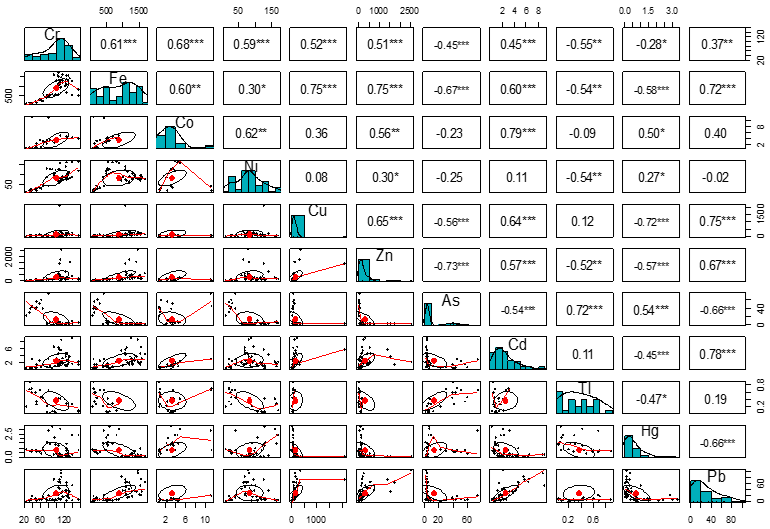
Figure 1: Bivariate scatter plot with a fitted line, indicating correlation among heavy metals found in the opium users.
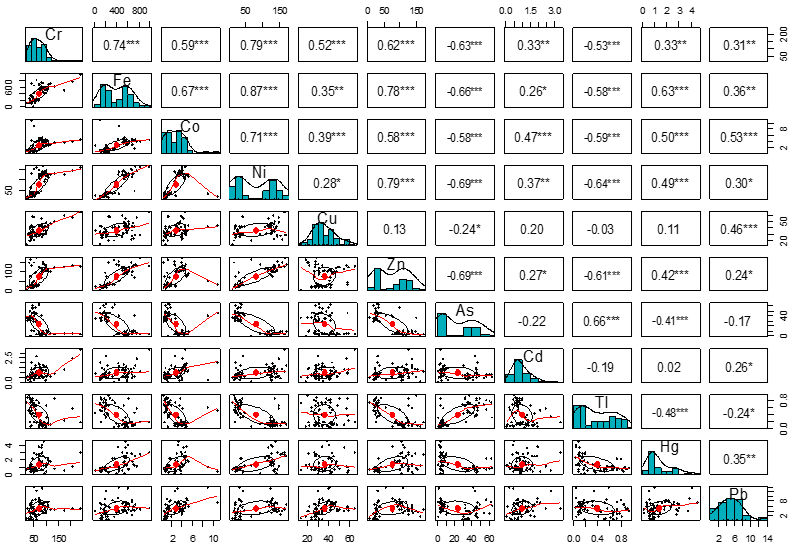
Figure 2: Bivariate scatter plot with a fitted line indicating correlation among heavy metals in non-opium users.
Principal and component analyses
15
The data from the CA values of the heavy metals in the serum samples of the opium group revealed a very strong clustering of Cu-Zn-Hg-Cd-Pb and Ni-Tl-Cr-As-Fe-Co. In the case of opium users, PC-1 was dominantly loaded with Cr-Fe-Ni-Zn-As-Ta-Hg, and dully evidenced by the CA. The PC-2 showed the elevated loadings of Co-Cd and Pb, whereas, Cu revealed maximum loadings in PC-3, which were in good agreement with the CA.
The PCA of selected metals in the serum of non-users yielded three PCs with Eigen values greater than one, which commutatively explained more than 75.95% of the total variance of the data (Table 4). The CA of the heavy metals in the sera of opium users revealed a very strong clustering of Cr-Cu-cd-Pb-Co with As-Zn-Ni-Fe-Tl-Hg (Figure 4). In this context, PC-1 showed elevated loadings of Fe-Ni-Zn-As-Tl-Hg, with a strong cluster in CA. In this group, the PC-2 consisted of Cr-Cu and Cd, while PC-3 revealed the highest loadings of Co-Pb.
Table 4: Principal component analysis for selected metals in the serum samples of opium and non-opium users.
|
Opium Users |
Non-users |
| Pc1 |
Pc2 |
Pc3 |
Pc1 |
Pc2 |
Pc3 |
| Eigenvalue |
5.35 |
3.02 |
1.06 |
5.70 |
1.51 |
1.14 |
| Total variance (%) |
48.65 |
27.52 |
9.67 |
51.82 |
13.71 |
10.41 |
| Cumulative variance (%) |
48.65 |
76.17 |
85.85 |
51.82 |
65.53 |
75.95 |
| Cr |
0.89 |
|
|
|
0.78 |
|
| Co |
|
0.94 |
|
|
|
0.64 |
| Ni |
0.98 |
|
|
0.90 |
|
|
| Cu |
|
|
0.96 |
|
0.84 |
|
| Ti |
-0.69 |
|
|
-0.81 |
|
|
| Hg |
0.57 |
|
|
0.71 |
|
|
| Pb |
|
0.89 |
|
|
|
0.89 |
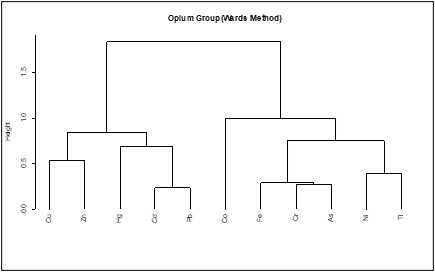
Figure 3: Cluster analysis of selected heavy metals in the sera of opium users.
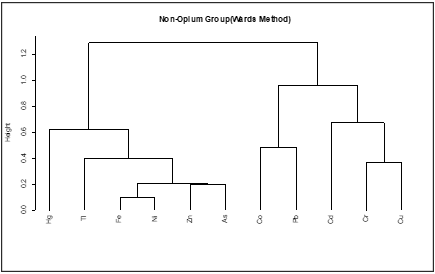
Figure 4: Cluster analysis of selected heavy metals in the sera of non-opium users.
The prognostic model created by our analyses had a sensitivity of 72.2%, with a confidence interval (CI) of 95% (63.4-86.2) and 89.9% specificity (95% CI, 69.6–96.7) for individuals whose serum Pb levels were higher than 8.1. The best cut-off point between the opium and non-opium groups for Cd was 1.4 with sensitivity and specificity of 72.2% and 82.6%, respectively. Finally, the best cut-off points of Cu and Hg between the opium users and the controls were found to be 43.5 and 0.4 respectively, with the sensitivity and specificity of 77.8% and 82.6%, and 53.7% and 92.8 %, respectively (Figure 5).
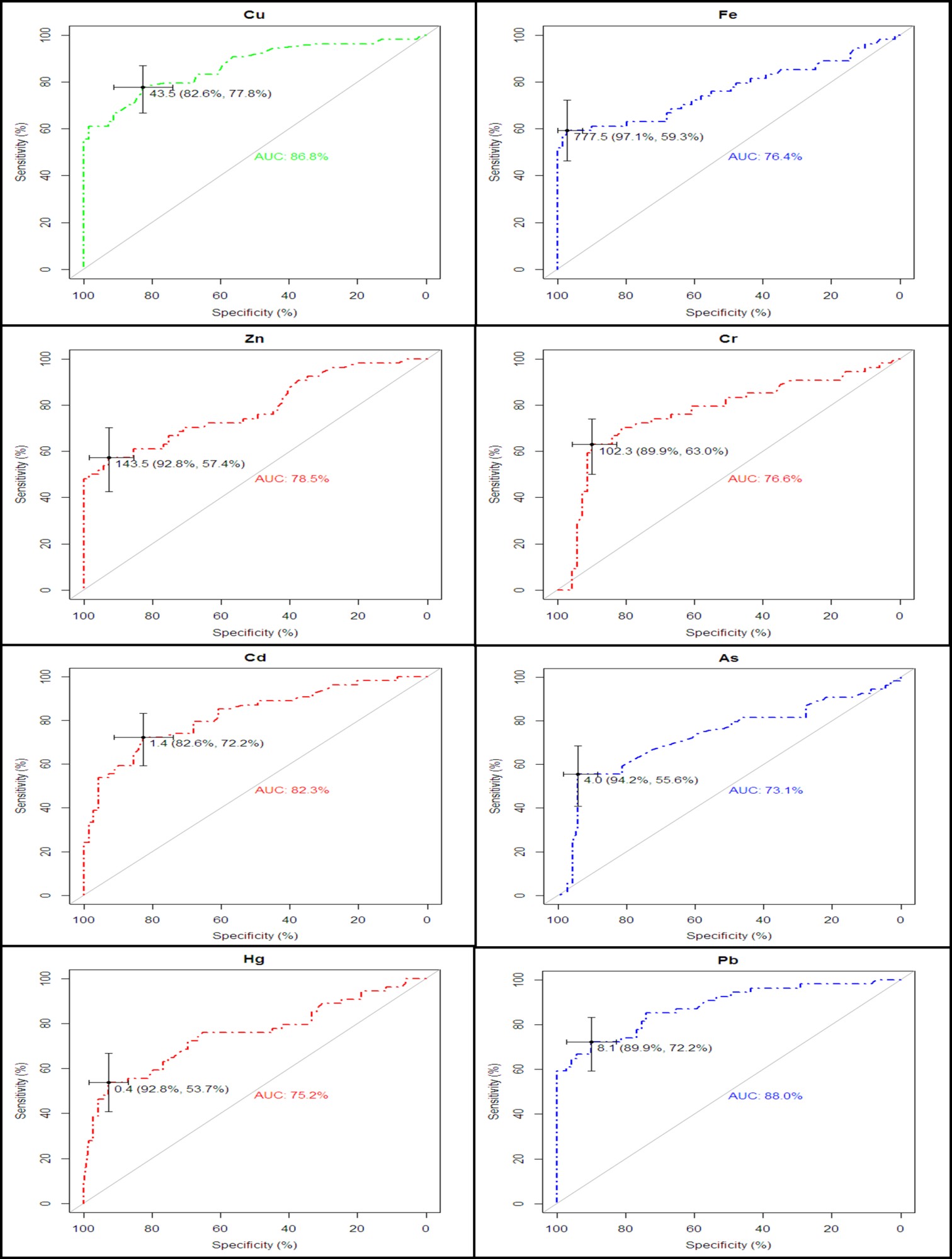
Figure 5: Receiver Operating Characteristic curve analysis to evaluate the best cut-off point for Fe, Cu, Zn, Cr, Cd, As, Hg, and Pb levels, with its specificity and sensitivity of risk prediction for opium users.
Discussion
Recently, heavy metals exposure in opioid users has received much attention in the literature. Results of the present study showed elevated blood levels of lead, mercury, chromium, and copper in opium users, compared to the non-users. Toxic heavy metal, Pb, has been found in opium samples and in various species of opium poppies [16-19]. Aghaee-Afshar et al. have previously reported the presence of Pb in 10 opium-sourced samples from various areas in the southeast of Iran [19].
In another study that examined heavy metals contamination in illicit opioid-like drugs in Iran, the highest concentrations of lead (138.10±75.01 μg/g) and chromium (447.38±20.27 μg/g) were found in opium samples versus heroin and crack [16]. Previous studies have reported high blood lead levels among opium addicts, associated with adverse effects, such as anemia, abdominal pain, and deficiency in folate and vitamin B12 levels [12, 14, 20-22].
Lead poisoning
Lead poisoning and certain health complaints among opium users could be due to the consumption of contaminated products. Lead contamination in opium can be due to multiple factors, the principal of which is the pollution of water and soil with agricultural chemicals and the application of inappropriate techniques and equipment associated with the cultivation of opium [23]. Moreover, lead can be deliberately added to opium products to raise their weight and enhance the financial gains of opium traders and smugglers [16].
Furthermore, it is essential to remember not only the contamination of opium with lead but also its transmission to various human organs and the bioavailability of heavy metals. In opium users, lead may come from nutritional sources, depending on its route, method, and duration of use. These variables can impact the incidence of lead accumulation in the human body [24]. Besides lead poisoning secondary to opium use, some scholars have suggested a role for this toxic metal in opioid pharmacodynamics. It has been stated that lead can interfere with the functionality of the neuronal pathways responsible for the development of addiction. In particular, it may alter the metabolism and dopamine receptor presentation, and cause neuroinflammatory conditions due to morphine tolerance [25].
Mercury poisoning
Mercury is one of the harmful pollutants to human health globally. It has been listed as the top 10 chemicals of public health concerns by the World Health Organization. Certain aquatic foods, consumer and industrial products, and occupational settings expose mercury to humans which could be harmful to their health [26]. Consistent with our findings, Azadi et al. [7] recently showed significantly high levels of Hg in the urine samples of patients with a history of opium addiction, compared to those of healthy subjects. That study also suggested that the users of inhaled opium showed higher levels of Hg in the blood, compared to those who consumed it orally [7].
Arsenic and cadmium poisoning
A study has identified toxic heavy metals, such as arsenic (As), cadmium (Cd), mercury (Hg), and nickel (Ni), in drugs containing opioids, cannabinoids, and in biological samples, such as whole blood, scalp hair, and serum samples from 311 male drug abusers [27]. These authors have reported the highest level of mercury present in some opium and heroin samples. In the same study, the concentrations of mercury in scalp hairs, serum, and blood samples from individuals who used opioids and cannabinoids were higher, compared to those from control subjects across all age brackets [27]. It is important to note that specific forms of mercury, the amount of exposure, and the frequency of consumption significantly influence its potential hazard to human health [28].
Chromium poisoning
Chromium, especially in hexavalent form, is known to be carcinogenic to humans based on evidence from epidemiological studies [29-31]. In an Iranian study, the levels of different metallic contaminants in illicit, opioid-like substances were measured. The aforementioned study reported the highest levels of lead (138.10±75.01 μg/g) and chromium (447.38±20.27 μg/g) in opium samples. In the above-mentioned research, the calculated daily intake of chromium was 22.37 μg/kg for opium, a value in excess of the reference dosage, which is 3 μg/kg/day [16].
In addition, another study conducted in Kermanshah, Iran, analyzed the levels of essential and toxic heavy metals in the urine samples of opium users versus healthy individuals. The opium addicts showed higher urinary levels of chromium, compared to the healthy subjects [7]. Potential carcinogenic effects of opium consumption [32] can be a consequence of contamination with either lead, cadmium, or chromium. For instance, the analysis of cumulative exposure to opium has indicated an increased risk of cancer associated with elevated levels of opium use [32].
Zinc and copper poisoning
Zinc and copper are known to have certain levels of antagonism with each other in terms of biological functions [33]. It appears that conditions representing Zn deficiency are manifested more often among opioid users than users of other substances. Low Zn level is always linked to increased Cu levels in the sera and erythrocytes of heroin users [34]. Moreover, it is known that the urinary elimination of copper decreases under methadone maintenance treatment [35, 36].
Limitations of the study
The current study did not assess the amount of various heavy metals in opium since the collection of such samples from participants was complicated. Therefore, such analyses should be considered in future studies. Additionally, there was a lack of complete information on the nutritional habits of subjects or how diet could change the levels of trace elements in the participants.
Conclusions
Based on the findings of this study, the serum levels of Pb, Cr, Hg, and Cu were at higher levels in opium users than in non-users. Screening tests are recommended to determine the levels of various toxic heavy metals in opium users. Determination of trace elements levels and toxic heavy metals in opium users, compared to those of non-users is recommended. These variables are likely to influence the pharmacodynamics of opioids and the duration of opium addiction. Data on such variables should be collected and analyzed by clinicians and health researchers alike.
Conflict of Interests
The authors declare no conflict of interest with any internal or external entities in the conduction of this research project.
Funding
This study was financially supported by the Anti-narcotics headquarters of Birjand, South Khorasan Province, Iran.
Acknowledgement
This study was supported by the Anti-narcotics Headquarters of Birjand in South Khorasan province, Iran. The authors appreciate the reviewers at Medical Editors and Review Consultants International of Virginia, USA, for their edits and structuring of the manuscript text based on native English prior to submission to this journal for publication.
Compliance with Ethical Guidelines
All work was conducted under an ethical committee at Birjand University of Medical Sciences.
Authors' Contributions
K. S., S. N., and B. M. proposed the idea and designed the study protocol. S. N., B. M., B. R., A. A., and K. T. searched the literature in databases and wrote parts of the manuscript. A. A. contributed to statistical analyses and edited the Result section. K. S., B. M., A. A., and K. T. reviewed the final manuscript. S. N., B. M., and A. A. wrote the Discussion section. S. N. and B. M. supervised the revision process of the manuscript. B. M. served as the corresponding author.
References
- Alinejad, S., et al. Clinical aspects of opium adulterated with lead in Iran: a review. Basic & Clinical Pharmacology & Toxicology. 2018;122(1):56-64. [doi: 10.1111/bcpt.12855] [pmid: 28802093]
- Ghane, T., et al. Lead poisoning outbreak among opium users in the Islamic Republic of Iran, [2016-2017. Bulletin of the World Health Organization. 2018;96(3):165. doi: 10.2471/BLT.17.196287] [pmid: 29531415]
- Farnia, V., et al. Blood lead concentration among oral/inhaled opium users: systematic review and meta-analysis. Critical Reviews in Toxicology. 2021;51(1):24-35. [doi: 10.1080/10408444.2020.1864722] [pmid: 33528296]
- Rahimi, M., M.A. Eshraghi, and S. Shadnia. Lead contamination in opium, opium tincture, and methadone oral solution, in Iran. Addiction & Health. 2020;12(1):34. [doi: 10.22122/ahj.v12i1.258] [pmid: 32582413]
- Tabrizi, R., et al. A systematic review and meta-analysis on blood lead level in opium addicts: An emerging health threat. Biological Trace Element Research. 2021;199: 3634-3641. [doi: 10.1007/
s12011-020-02504-1] [pmid: 33244670]
- Farnia, V., et al. Comparison of urine trace element levels in tramadol addiction alone and its co-abuse with cigarette and opium in Western Iran. Environmental Science & Pollution Research. 2022;29(51):77375-77385. [doi: 10.1007/s11356-022-21271-1] [pmid: 35675014]
- Azadi, N., et al. Multivariate statistical evaluation of heavy metals in the urine of opium individuals in comparison with healthy people in Western Iran. Environmental Science & Pollution Research;29(6):
8232-8241. [doi: 10.1007/s11356-021-16271-6] [pmid: 34482458]
- Amiri, M. and R. Amini. A comparison of blood-lead level (BLL) in opium-dependant addicts with healthy control group using the graphite furnace/atomic absorption spectroscopy (GF-AAS) followed by chemometric analysis. Iranian Red Crescent Medical Journal. 2012;14(8):488. [Link]
- Salehi, H., et al. Comparison of serum lead level in oral opium addicts with healthy control group. Arch Iranian Med. 2009;12(6):
555-558. [pmid: 19877747]
- Mannan, S.J., et al. Investigation of serum trace element, malondialdehyde and immune status in drug abuser patients undergoing detoxification. Biological Trace Element Research. 2011;140:272-283. [doi: 10.1007/s12011-010-8696-z][pmid:
20390377]
- Hossain, K.J., et al. Serum antioxidant micromineral (Cu, Zn, Fe) status of drug dependent subjects: Influence of illicit drugs and lifestyle. Substance Abuse Treatment, Prevention, & Policy.2007; 1-7. [doi:10.1186/1747-597X-2-12]
- Ghaemi, K., et al. Blood lead levels in asymptomatic opium addict patients: A case control study. Emergency. 2017;5(1):e69. [pmid: 28894784]
- Akbari, A., et al. Serum zinc, copper, iron, and magnesium levels in Iranian drug users: a case control study. Journal of Addiction Medicine. 2015;9(4):304-307. [doi: 10.1097/ADM.000000000
0000134] [pmid:26125147]
- Khatibi-Moghadam, H., M. Khadem-Rezaiyan, and R. Afshari. Comparison of serum and urine lead levels in opium addicts with healthy control group. Human & Experimental Toxicology. 2016;35(8):861-865. [doi: 10.1177/0960327115607947] [pmid: 26482096]
- Nemati, A., et al. Comparing blood lead level among oral/inhaled opium addicts with a non-addict control group in the southeast of Iran. Addiction & health. 2016;8(4):235. [pmid: 28819554]
- Aghababaei, R., et al. Occurrence of bacterial and toxic metals contamination in illegal opioid-like drugs in Iran: a significant health challenge in drug abusers. DARU Journal of Pharmaceutical Sciences. 2018;26(1):77-83.17. [doi: 10.1007/s40199-018-0205-5] [pmid: 30159760]
- Mudiam, M.R., et al. Quantitative evaluation of 28 mineral elements by inductively coupled plasma/mass spectrometry and its application in source identification of Indian opium. Journal of AOAC International. 2005;88(5):1469-1484. [pmid: 16385998]
- Ivan, S. and F. Jozef. Content of heavy metals in poppy seeds (Papaver somniferum L.). Advances in Environmental Biology. 2011;5(2): 496-501. [Link]
- Aghaee-Afshar, M., et al., Presence of lead in opium. Arch Iran Med. 2008;11(5):553-554. [pmid: 18759525]
- Domeneh, B.H., N. Tavakoli, and N. Jafari. Blood lead level in opium dependents and its association with anemia: A cross-sectional study from the capital of Iran. J of Res in Med. Sci. The official journal of Isfahan University of Medical Sciences. 2014;19(10):939. [pmid: 25538776]
- Mohsen Masoodi, M., et al. Abdominal pain due to lead-contaminated opium: a new source of inorganic lead poisoning in Iran. Arch Iran Med. 2006;9(1):72-75. [pmid: 16649384]
- Amirabadizadeh, A., S. Nakhaee, and O. Mehrpour. Risk assessment of elevated blood lead concentrations in the adult population using a decision tree approach. Drug & Chemical Toxicology. 2020; 45(2):878-885. [doi: 10.1080/01480545.2020.
1783286] [pmid:32588664]
- Karrari, P., O. Mehrpour, and M. Abdollahi. A systematic review on status of lead pollution and toxicity in Iran; Guidance for preventive measures. DARU Journal of Pharmaceutical Sciences. 2012;20(1):1-17. [doi: 10.1186/1560-8115-20-2] [pmid: 23226111]
- Nakhaee, S. and O. Mehrpour. The transition of lead and microbial contamination from adulterated opium to the human body. Expert Opinion on Drug Metabolism & Toxicology. 2019;15(4):259. [doi: 10.1080/17425255.2019.1588250] [pmid:30849246]
- Kupnicka, P., et al. Morphine-element interactions: The influence of selected chemical elements on neural pathways associated with addiction. Journal of Trace Elements in Medicine & Biology. 2020;60:126495. [doi: 10.1016/j.jtemb.2020.126495] [pmid:32179426]
- Basu, N., et al. Our evolved understanding of the human health risks of mercury. Ambio. 2023;52(5):877-896. [doi: 10.1007/s13280-023-01831-6] [pmid: 36790578]
- Unar, A., et al. Determination of Toxic Elements in Cannabinoid and Opioid Drugs and Their Impact on Addicts’ Health: A Comparative Study. Biological Trace Element Research. 2024; 202(12):5339-5347. [doi: 10.1007/s12011-024-04096-6] [pmid:3838917]
- Clarkson, T.W., J.B. Vyas, and N. Ballatori. Mechanisms of mercury disposition in the body. American Journal of Industrial Medicine. 2007;50(10):757-764. [doi: 10.1002/ajim.20476] [pmid:17477364]
- Thompson, C.M., et al. A chronic oral reference dose for hexavalent chromium‐induced intestinal cancer. Journal of Applied Toxicology. 2014;34(5):525-536. [doi: 10.1002/jat.2907] [pmid: 23943231]
- Park, R.M., et al. Hexavalent chromium and lung cancer in the chromate industry: a quantitative risk assessment. Risk Analysis: An International Journal. 2004;24(5):1099-1108. [doi: 10.1111/j.0272-
4332.2004.00512.x] [pmid:15563281]
- Proctor, D.M., et al. Assessment of the mode of action for hexavalent chromium-induced lung cancer following inhalation exposures. Toxicology. 2014;325:160-179. [doi: 10.1016/j.tox.
2014.08.009] [pmid:25174529]
- Mr. Filho, A., et al. The carcinogenicity of opium consumption: a systematic review and meta-analysis. European Journal of Epidemiology. 2023;38(4):373-389. [doi: 10.1007/s10654-023-00969-7] [pmid: 36773182]
- sredkar, J. and N. Sustar. Copper and zinc, biological role and significance of copper/zinc imbalance. J Clinic Toxicol. 2011;3(2161):0495. [doi:10.4172/2161-0495.S3-001]
- Martínez, M.R., et al. Trace elements in drug addicts. Klinische Wochenschrift. 1990;68:507-511. [doi: 10.1007/BF01648242] [pmid:2374368]
- Iyengar, V., et al. Excessive urinary excretion of zinc in drug addicts: a preliminary study during methadone detoxification. Journal of Trace Elements and Electrolytes in Health and Disease. 1994:8(3-4):213-215. [pmid: 7599515]
- Nakhaee, S., et al. Evaluation of urinary trace element levels in patients with opioid use disorder undergoing methadone treatment in western Iran. Scientific Reports. 2024;14(1):5662. doi: 10.1038/s41598-024-56241-9] [pmid: 38454098]
Type of Study:
Research |
Subject:
General


 , Samaneh Nakhaee2